

Building Smarter: Why Modern Construction Is Moving Away from Traditional Welded Connections
The construction industry is constantly evolving. Contractors, engineers, and project owners are under increasing pressure to complete projects faster, manage labor shortages, control costs, and maintain the highest levels of quality and safety. As a result, many traditional construction practices are being reevaluated—including the reliance on field welding for structural connections.
Today's projects demand smarter solutions, and that's where NexSpan2™ is helping contractors rethink how structural connections are installed.
The Challenges of Traditional Welding
For decades, field welding has been a standard method of connecting structural steel. While effective, it presents several challenges that can impact project schedules and budgets.
Field welding often requires highly skilled labor, specialized equipment, inspections, and weather-dependent working conditions. With skilled labor becoming increasingly difficult to find, many contractors are looking for alternatives that can help them maintain productivity without sacrificing performance.
Additionally, welding operations can create bottlenecks on busy jobsites. Delays caused by weather, inspection requirements, or labor availability can quickly affect project timelines.
Building Smarter with Pre-Engineered Connection Systems
Modern construction is increasingly embracing engineered connection systems that simplify installation while maintaining structural integrity.
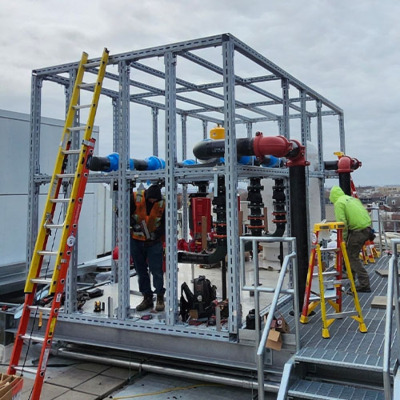
NexSpan2™ was developed to help contractors build smarter by reducing installation complexity and minimizing labor requirements. Instead of relying on time-consuming field fabrication or welding, NexSpan2™ provides a standardized connection solution designed for efficient installation.
By simplifying the connection process, contractors can spend less time on installation and more time advancing the project schedule.
Strength You Can Trust
Simplified installation doesn't mean sacrificing performance.
NexSpan2™ is engineered to provide the strength and reliability required for demanding structural applications. Whether supporting secondary steel, equipment platforms, rooftop structures, telecommunications infrastructure, or industrial applications, NexSpan2™ is designed to deliver dependable performance in the field.
The result is a connection system that combines engineering confidence with practical constructability.
Supporting Today's Labor-Constrained Workforce
The construction industry continues to face labor challenges across nearly every sector. Skilled tradespeople remain in high demand, and project schedules often depend on maximizing the productivity of available crews.
NexSpan2™ helps address these challenges by providing a solution that can be installed efficiently without the extensive labor requirements associated with traditional connection methods.
For contractors, this means fewer installation hurdles, improved crew productivity, and more predictable project execution.
Made in the USA
Supply chain reliability has become more important than ever. Contractors and project owners need confidence that critical project components will be available when required.
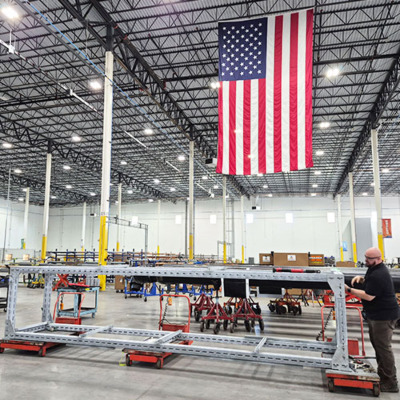
NexSpan2™ is proudly manufactured in the United States, providing customers with the benefits of domestic production, shorter lead times, and responsive customer support. Domestic manufacturing also helps ensure consistent quality and provides greater control throughout the production process.
When schedules matter, having a dependable supply chain can make all the difference.
The Future of Structural Connections
As construction projects become more demanding, the industry will continue to adopt solutions that improve efficiency, reduce complexity, and maximize productivity.
NexSpan2™ represents that shift toward smarter construction. By combining engineered strength, simplified installation, and domestic manufacturing, it provides contractors with a practical solution for today's building challenges.
The future of construction isn't about working harder—it's about building smarter.
About the Author

Comments